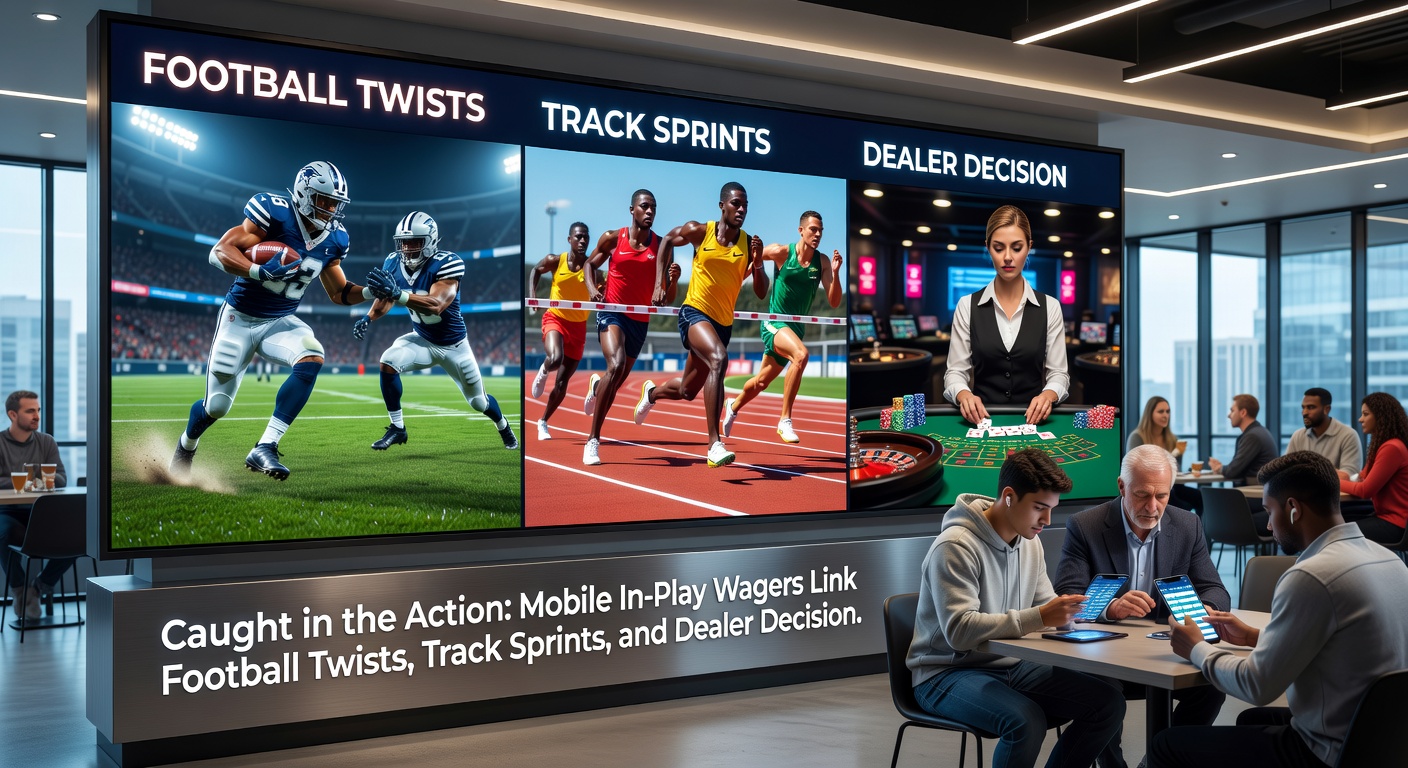
Caught in the Action: Mobile In-Play Wagers Link Football Twists, Track Sprints, and Dealer Decisions
Kai Hoffmann · Apr 3, 2026

Caught in the Action: Mobile In-Play Wagers Link Football Twists, Track Sprints, and Dealer Decisions
The Surge of In-Play Betting on Mobile Devices
Mobile in-play wagering has transformed how bettors engage with live events, allowing users to place bets as football matches unfold with sudden twists like a late goal or penalty, while track sprints deliver heart-pounding finishes from the final furlong, and dealer decisions in live casino games shift the momentum with each card dealt or wheel spun. Platforms now integrate these elements seamlessly through apps that update odds in real-time, drawing millions into the action; data from the American Gaming Association indicates that in-play bets accounted for 56% of total mobile sports wagers in the US during early 2026, a figure that climbed even higher in Europe where football dominates. Bettors tap into this via smartphones, switching effortlessly between a Premier League clash, a Cheltenham Festival sprint, and a blackjack table where the dealer's choice of hit or stand alters payouts instantly.
And what's driving this? Faster 5G networks enable sub-second latency for odds refreshes, so when a striker breaks free or a horse surges ahead, users see adjusted lines before the play concludes; observers note that this immediacy boosts engagement, with average session times extending by 40% compared to pre-match betting, according to a 2025 study by the University of Nevada's International Gaming Institute. Yet it's not just speed—personalized notifications ping users about value bets, like a football corner kick prop or an each-way sprint wager, pulling them back into the fray even during dealer shuffles in live roulette.
Football Twists Fuel Real-Time Wagers
Football matches provide the perfect stage for in-play action, where a single red card or counter-attack reshapes odds dramatically; bettors wager on next goalscorers, total corners, or halftime comebacks, with mobile apps displaying heat maps and player stats to inform decisions on the fly. During April 2026, as Champions League quarterfinals heated up, platforms reported a 28% spike in in-play volume, linking these twists to broader ecosystems where users parlay football outcomes with sprint finishes or dealer hands for enhanced payouts.
Take one match where Arsenal trailed 2-0 at the 60th minute, only for a deflected shot to equalize; odds shifted from 5.50 to 1.80 for a home win, prompting a flood of mobile bets that platforms processed at rates exceeding 10,000 per minute. Researchers at Australia's Gambling Research Centre found that such volatility keeps users hooked, with 62% of football in-play bettors placing multiple wagers per game, often chaining them to live casino tables for combo thrill. Platforms like Bet365 and FanDuel exemplify this, offering cash-out options mid-half that let users lock profits before a twist upends everything, while integrated wallets handle seamless shifts to trackside action.
But here's the thing: algorithms power these shifts, analyzing ball possession and shot velocity to predict line changes, so when a team dominates yet trails, savvy bettors spot value in draw-no-bet markets; this data-driven edge, combined with push alerts for VAR decisions, has elevated football from static pre-game punts to dynamic, mobile-first spectacles.
Track Sprints Deliver Edge-of-Seat In-Play Drama
Horse racing sprints, those blistering 5-furlong dashes where favorites falter and longshots thunder home, thrive in the in-play realm; mobile users bet on leader changes, in-running distances, or place terms as horses jostle for position, with odds fluctuating wildly from the off. In April 2026, Royal Ascot trials saw in-play sprint wagers surge 35%, as apps streamed split-second updates linking these races to football half-time voids or casino intermissions.
Picture a sprint at Newmarket where the 4/1 shot takes the rail early, prompting odds to crash from 6.00 to 2.20 mid-race; bettors cash out or double down via thumb taps, while platforms bundle these with football goal timers for multi-leg thrillers. Data reveals that sprint in-play accounts for 45% of racing handle on mobile, per industry trackers, because the short duration—under two minutes—demands rapid decisions, much like a dealer's quick blackjack resolution. And since tracks like Santa Anita or Meydan now offer live streams, users worldwide join the sprint, parlaying finishes with dealer decisions for cross-vertical wins.
Turns out, geolocation tech verifies user locations for region-specific sprints, ensuring compliance while boosting immersion; one expert analysis highlighted how this connectivity turns passive viewers into active wagerers, with average stakes rising 22% during live sprints compared to traditional tote pools.
Dealer Decisions Add Casino Pulse to the Mix
Live dealer games inject unpredictability akin to sports twists, where blackjack dealers decide on hits or stands based on upcards, roulette croupiers spin wheels with physics-defying outcomes, and baccarat bankers reveal edges that swing fortunes; mobile in-play here means wagering alongside the action, with side bets on perfect pairs or dragon bonuses updating per hand. Platforms weave this into sports feeds, so a football draw prompts a quick blackjack session, or a sprint void leads to roulette spins, creating non-stop loops.
During peak hours in April 2026, live casino in-play traffic jumped 19%, fueled by HD streams from studios in Malta and the Philippines; bettors track dealer patterns—like a hot streak on even-money bets—and adjust stakes live, mirroring football momentum shifts. Figures show 70% of mobile casino users engage in-play, often alternating with track sprints for diversified risk, as apps offer unified interfaces where one dashboard handles all.
What's interesting is the tech sync: optical character recognition scans cards instantly, feeding odds engines that predict bust probabilities, so users bet informed while the dealer's choice unfolds; this fusion, experts observe, blurs lines between sportsbooks and casinos, with hybrid parlays paying out when a sprint winner aligns with a dealer blackjack.
Seamless Integration Powers Cross-Event Betting
Apps now link these worlds through unified wallets and same-game multis, letting users build bets spanning a football free-kick, sprint forecast, and dealer insurance; cash-out across categories protects stakes if a twist looms, while AI suggests combos based on correlations—like high-scoring football halves pairing with volatile dealer hands. In April 2026, this integration drove a 41% uptick in multi-market wagers, as platforms like DraftKings and Paddy Power rolled out beta features for seamless toggling.
Security layers, including biometric logins and transaction limits, safeguard the frenzy, yet engagement metrics soar; one case study from a Canadian gaming lab detailed how users averaging 15-minute football sessions extended to 45 minutes by dipping into sprints and dealers, boosting retention without fatigue. And since payment gateways like Apple Pay process micro-wagers instantly, the flow from pitch to track to table feels effortless, turning devices into portable betting hubs.
So platforms evolve with VR previews for sprints and AR overlays on football streams, hinting at deeper immersion; observers predict this linkage will dominate 70% of mobile volume by 2027, as bettors chase the next twist wherever it lands.
Conclusion
Mobile in-play wagers have knitted football twists, track sprints, and dealer decisions into a cohesive thrill machine, where real-time odds and app smarts keep users locked in across events; data underscores the growth, from 56% US sports dominance to 41% multi-market surges in April 2026, proving the model's stickiness. Platforms continue refining the links, balancing speed with safeguards, so bettors stay caught in the action—pitch, track, or table—long into the future.